Online couples therapy for LGBTQ+ partners across California, from a therapist who shares your community. Start with a free 20-minute consultation and see whether it feels like a fit.
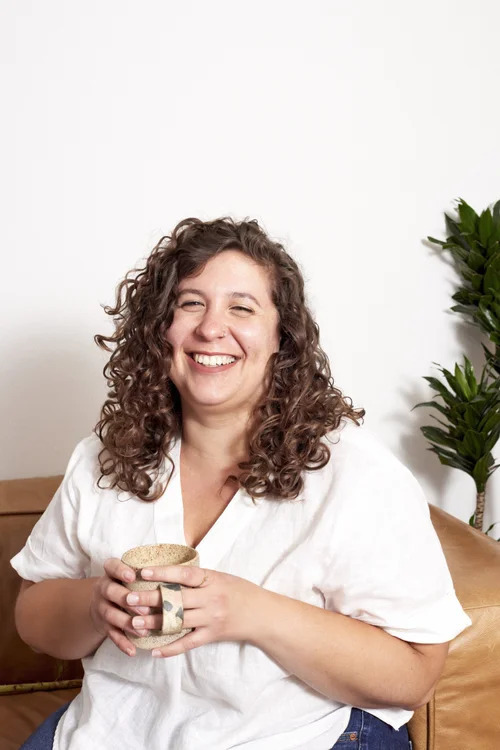
Leave your details and I'll be in touch to find a time that works. Sessions are online, so we can meet from anywhere in California.
Good couples therapy depends on both of you feeling safe with your therapist. Here's how I make starting feel simple.
I'm Laura, a queer therapist working with queer couples. You won't have to explain your relationship, your identities, or your family to me from scratch.
Learn more about me →Coming to therapy together can feel daunting, especially if one of you is more sure than the other. I'll walk you both through what to expect.
See how sessions work →Book a free 20-minute consultation. We'll talk about what's happening between you and whether I'm the right fit. We meet online, so you just both need to be in California during sessions.
Book your free consult →Conflict rarely starts with the thing you're arguing about. Every couple arrives carrying something different: an argument that keeps circling back, a rupture you're rebuilding after, or a relationship you're still defining when the usual scripts don't fit. We start where you are.
Whether you've been together six months or sixteen years, married, partnered, or somewhere you're still defining.
The same argument, over and over, with no real resolution.
Still together, but the closeness has quietly gone somewhere else.
Mismatched needs, or a physical connection that has changed.
Working through a betrayal, a rupture, or a breach of trust.
Families of origin, chosen family, and the outside pressures that follow you home.
Polyamory and non-monogamy, gender transitions within a relationship, and partnerships outside the default script.
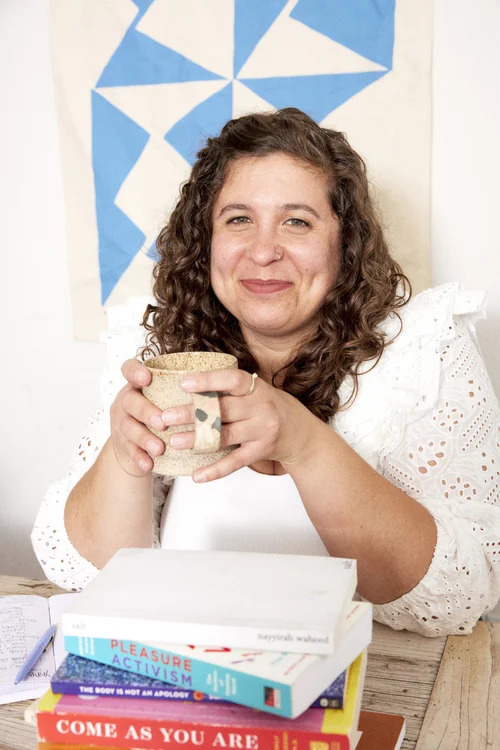
I'm Laura Grossman, a Licensed Marriage and Family Therapist based in Berkeley, working with couples online across California. I help partners get through the hard stretches and bring more happiness, connection, and confidence into their relationships.
My practice is grounded in compassion, respect, and a real understanding of what LGBTQ+ couples deal with, both inside the relationship and outside it. Gender identity, sexual orientation, relationship dynamics, and self acceptance are all things we can talk about openly, without you having to translate or educate first.
You are the experts on your own relationship. My job is to help you understand each other better and build the relationship you both want, without blame and without assumptions.
A small taste of how this work feels. Try this together, or on your own, when a conversation has taken more out of you than you expected.
When an argument escalates, both nervous systems are usually running the show long before either of you gets to the point. Learning to come back to your own body is what makes it possible to actually hear each other. This is one of the first practices I share with couples, because it asks for nothing except a little curiosity.
Start by sitting comfortably in your seat. If it helps, close your eyes and take a few slow breaths. If deep breathing isn't available to you right now, that's okay. Just allow yourself to feel the contact between the seat and the back of your body.
Next, place your feet on the floor or whatever surface is available. If there's no surface, notice how your feet meet your shoes or the open air. Take some time to feel your feet as if you'd never noticed them before.
See if you can identify any sensations: the texture of your socks, a tingling, a warmth. Offer your feet a little space to release any tension, even just a tiny bit. If that isn't possible, simply imagine your feet as relaxed as they could possibly be. Rest here.
When you feel complete, gently wiggle your toes or blink your eyes to return to a more alert state. If you're doing this together, take a moment before you start talking again.
A gentle note: dropping into the body can sometimes bring up unexpected emotions. If you find you need extra support, be kind to yourself, lean on practices that feel good, or reach out to someone you trust. Both self care and community care go a long way.
Trusted and recommended by licensed clinicians across California and beyond.
"Laura is really, really good at what she does, creating a safe, supportive space for her clients combined with highly effective therapeutic approaches, and facilitates profound healing and lasting change for those she serves. I highly recommend her!"
"I wholeheartedly recommend Laura. Her compassion, professionalism, and dedication to creating safe, supportive spaces are evident in all she does. She brings both skill and heart to her work, helping clients feel seen, understood, and empowered."
"Laura is a compassionate, insightful clinician. Her somatic approach helps queer and trans clients gently release deep wounds. I highly recommend working with her!"
"Laura is an authentic and deeply caring therapist. I have confidence in referring clients to her practice."
Verified professional endorsements via Psychology Today.
There's a different way to work through what's happening between you, with a therapist who gets your relationship from the start. Let's see if this feels right for you both, wherever you are in California.
Book My Free 20-Minute Consultation